Colonial rule was certainly the final outcome of the Company’s adventurism in Asia. But it was the hunt for personal and corporate profit that had drawn the Company inexorably on. The results of this enduring dynamic were world-shattering. By the time of its demise, the Company had changed the course of economic history, reversing the centuries’ old flow of wealth from west to east.
From Roman times, Europe had always been Asia’s commercial supplicant, shipping out gold and silver in return for spices, textiles and other luxury goods. European traders were attracted to the East for its wealth and sophistication at a time when the western economy was a fraction the size of Asia’s. And for its first 150 years, the Company had to repeat this practice, as there was almost nothing that England could export that the East wanted to buy. Then first in Bengal in the decades that followed Plassey, and then in China through the opium trade, the Company broke this longstanding pattern of trade and wealth.
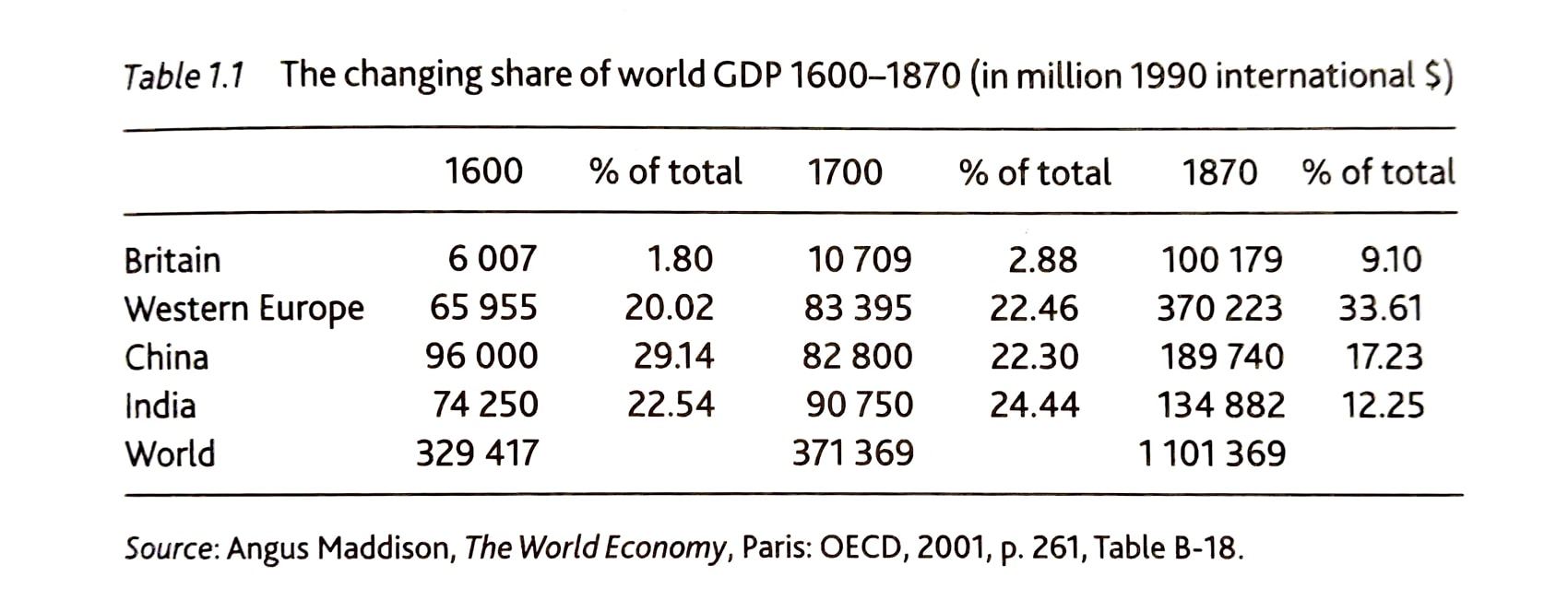
By the time of its demise, Europe’s economy was double the size of those of China and India, a complete reversal of the situation in 1600 (see Table 1.1). There are many elements in this turnaround, but the East India Company was certainly one of the chief agents that engineered the great switch in global development that marked the birth of the modern age.